


Table of Contents
Table of Contents
2026 update: We refreshed provider classifications and public network data. We also added cost categories, packaging materials, compliance checks, industry use cases, warehouse verification steps, and a practical pilot plan.
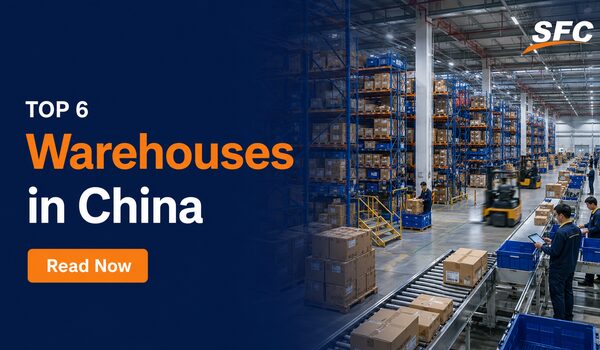
China has no shortage of warehouses. The harder part is finding one that fits the way your business actually works.
A large logistics network may be brilliant at moving parcels across China, yet awkward for a Shopify brand with 40 SKUs and custom thank-you cards. A cross-border carrier may offer a strong shipping line, but that does not automatically mean it provides detailed inventory control. And an enterprise contract logistics company may be excellent, though a little heavy for a young DTC store.
That is why this list is not a simple first-to-sixth ranking. The six companies below have different service models. Some run vast logistics networks. Some focus on cross-border parcels. Others are closer to the everyday idea of an ecommerce fulfillment warehouse.
We kept the six providers from the original article, but updated the old information and made the differences clearer. The best choice depends on your products, order volume, destination countries, sales channels, and how much hands-on warehouse work you need.
1. What Counts as a Warehouse Company in China?
People use “warehouse,” “3PL,” and “fulfillment center” as if they mean the same thing. They overlap, sure, but they are not identical.
| Provider Type | What It Mainly Does | When You Usually Need It |
| Storage warehouse | Receives and stores cartons, pallets, or inventory | You mainly need space and will arrange other operations separately |
| Fulfillment center | Stores units, processes orders, picks, packs, and dispatches parcels | You sell online and need daily B2C order handling |
| Third-party logistics provider | Manages several logistics activities under one contract | You want warehousing, fulfillment, transport, returns, or supply chain support together |
| Freight forwarder | Organizes international freight and related documents | You need to move bulk cargo between factories, ports, airports, and destination warehouses |
| Parcel carrier | Transports individual shipments through a delivery network | Your parcels are already packed and ready to move |
| Contract logistics provider | Designs and operates complex, often dedicated supply chain projects | You are a larger business with custom facilities, systems, compliance, or transport needs |
For a fuller breakdown, see China 3PL vs. freight forwarder. The distinction matters because the cheapest carrier quote is not a warehouse quote. Likewise, a building full of pallets is not automatically ready to process Shopify orders.
If your products are made in China and sold worldwide, you will usually need China warehousing services connected to inventory management, order processing, packaging, and international shipping. That connected workflow is the bit that turns storage space into fulfillment.
2. How We Compared These China Logistics Providers
There is no sensible universal ranking here. Instead, we looked at the questions a seller should ask before requesting a quote:
- What type of provider is it?
- Does it run warehouse operations, transport networks, or both?
- Is it built for domestic China distribution, global shipping, or destination-country fulfillment?
- Can it receive stock from several suppliers?
- Does it provide WMS access, store integration, API options, and inventory data?
- Can it handle labeling, kitting, branded packaging, inspection, and returns?
- Is it practical for the seller's order volume and SKU count?
- Are fees, service levels, claims, and stock-removal terms clear?
Public network numbers are useful, but only up to a point. A company can manage millions of square meters and still be the wrong fit for a small online brand. What matters is the part of that network you can actually use.
3. Six China Warehousing and Fulfillment Providers at a Glance
| Provider | Provider Type | Best For | Core Strength | Main Watch-Out |
| Cainiao | Platform logistics, smart warehousing, cross-border supply chain | Alibaba ecosystem and large international networks | Broad digital and physical logistics infrastructure | Independent-store access, warehouse location, and service scope need confirmation |
| JD Logistics | Integrated supply chain and warehouse-distribution network | China domestic fulfillment and larger omnichannel operations | Dense China network, automation, and end-to-end operations | Small global sellers may face a more enterprise-style onboarding process |
| SF Express / SF Supply Chain | Express, integrated supply chain, and contract logistics | Time-sensitive China distribution and complex supply chain projects | Strong domestic transport and operational control | Express coverage is not the same as ecommerce fulfillment capacity |
| DHL Supply Chain / SF Supply Chain | Enterprise contract logistics and fulfillment network | Large brands and specialized industries | Global standards combined with local China infrastructure | May be more service than a small DTC business needs |
| YunExpress | Cross-border B2C parcel network with fulfillment services | High-volume international ecommerce parcels | Dedicated cross-border lines and broad destination coverage | Shipping performance and warehouse SLA must be checked separately |
| SendFromChina | Inventory-led ecommerce fulfillment 3PL | Shopify, DTC, crowdfunding | Supplier-to-customer workflow from one China fulfillment operation | Confirm the rate card, product eligibility, and current operating metrics for your account |
4. Cainiao Smart Logistics Network (Alibaba Group)

(Cainiao’s modern logistics hubs, like this new multi-story Smart Gateway in Hong Kong, exemplify its technological prowess. )
Cainiao was founded in 2013 and grew out of Alibaba's ecommerce ecosystem. The old description of Cainiao as merely a coordinator behind other delivery companies is now too narrow. It provides cross-border express services, global supply chain solutions, overseas local logistics, warehousing, and logistics technology.
According to Cainiao's current company profile, its logistics network spans more than 200 countries and regions. It reports a global smart warehousing network of more than 10 million square meters and local parcel delivery services in nine countries and regions. In 2026, the company also announced plans to build large-scale robot warehouse networks in Hong Kong, the United States, and Europe.
Those figures show scale. More importantly, they show that Cainiao is no longer just a digital connection layer. It operates logistics products and infrastructure of its own.
Where Cainiao Fits Well
Cainiao is a natural name to consider if you sell through AliExpress or work closely with Alibaba's wider commerce ecosystem. It may also fit brands that need coordinated cross-border transport, bonded services, overseas warehouses, and local delivery across several markets.
Its technology is a major part of the appeal. Digital waybills, automated sorting, warehouse robotics, route planning, and customs-data systems can remove a fair amount of manual work when the setup is right.
What Independent Sellers Should Confirm
Do not assume that every Cainiao facility works like a shared 3PL warehouse that any Shopify store can join. Ask which facility would hold your inventory and which services are included for your account.
Confirm these details:
- supported sales channels and integration methods
- receiving rules and appointment requirements
- pick-and-pack services at the selected warehouse
- packaging options and custom work
- minimum volume or contract commitments
- countries covered by the quoted logistics product
- destination-country returns and claims handling
Cainiao may be a powerful network choice. Still, the network needs to match your actual order flow, not just look impressive on a map.
5. JD Logistics
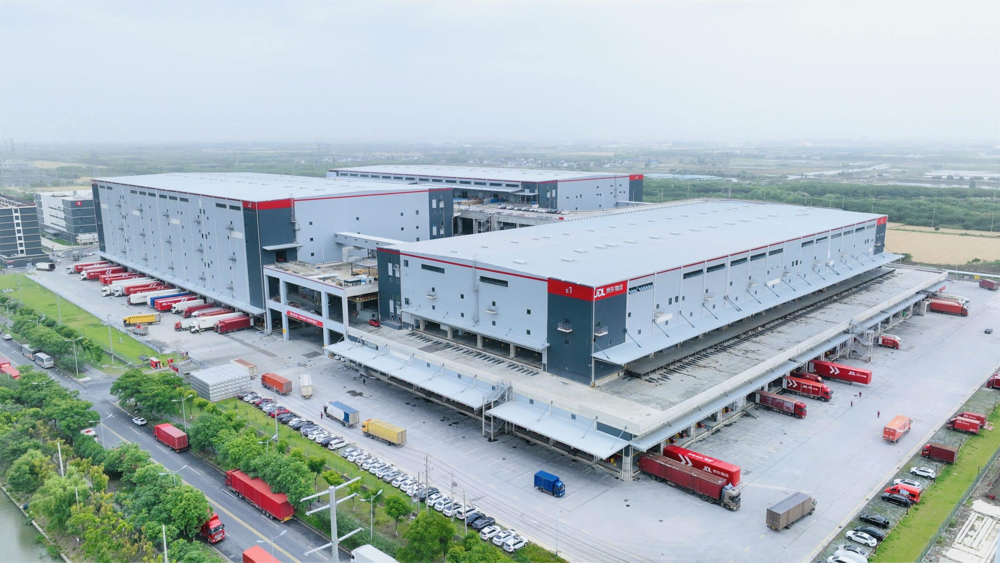
(The JD Logistics “Asia No.1” warehouse complex in Kunshan showcases JD’s vast infrastructure, with automated facilities that can handle millions of parcels a day.)
JD Logistics began as the logistics arm of JD.com. It built a reputation around controlled warehousing, fast domestic delivery, automation, and careful handling of electronics and other higher-value goods. The business now serves external customers as an integrated supply chain provider.
The warehouse figures in the original article came from 2021 and needed an update. As of June 30, 2026, JD Logistics reports more than 1,600 self-operated warehouses with over 34 million square meters of gross floor area. Other reports sometimes give higher warehouse totals because they include managed or partner facilities. That is why the counting method matters.
Where JD Logistics Is Strong
JD Logistics is especially relevant when your customers are inside China. Its domestic warehousing and distribution network can support retailers, manufacturers, marketplace sellers, and omnichannel brands that need inventory close to Chinese consumers.
The company also has experience with large product catalogs, high order volume, automated facilities, bulky goods, cold chain, and industry-specific supply chains. For a serious domestic China operation, that range can be valuable.
Where Smaller Global Sellers Should Look Closely
A small brand shipping individual parcels from China to buyers in ten countries has a different job to do. Before choosing JD Logistics, check whether the offered solution includes cross-border B2C fulfillment rather than only domestic storage, bulk freight, or enterprise supply chain services.
Ask about:
- account and contract minimums
- supported ecommerce platforms
- international parcel routes
- English-language account support
- custom packaging and kitting
- return locations outside China
- inventory export if you later change warehouses
JD's size is a strength, but size alone does not make onboarding simple. Get the exact operating plan in writing.
6. SF Express
SF Express is one of China's best-known delivery brands. Its strength comes from operational control, broad domestic coverage, air and ground transport, and a premium service position. SF Supply Chain extends that picture into warehousing, distribution, cold chain, and integrated supply chain work.
The original article used service-center and aircraft numbers to describe SF. Those figures change over time, and they can give the wrong impression. An express service center is not necessarily a warehouse where an ecommerce seller can store units, connect a Shopify store, and request branded packing.
Express Network vs. Fulfillment Warehouse
Think of an express network as the road system and the fulfillment warehouse as the kitchen. Both help deliver the meal, but they do different work.
SF can be a strong choice when domestic speed and controlled transport are priorities. It also works with enterprise customers that need integrated warehousing and distribution. Certain projects may involve cold chain, high-value goods, healthcare, industrial products, or time-sensitive replenishment.
What Global Ecommerce Sellers Should Ask
If you want China-to-consumer fulfillment, ask which company and facility will perform each step:
- Who receives and counts supplier inventory?
- Where is the stock stored?
- Which system holds the inventory record?
- Who picks and packs each order?
- Which service transports the parcel internationally?
- Who performs last-mile delivery?
- Who handles a lost parcel or return?
You may receive a solution involving SF Express, SF International, SF Supply Chain, or another operating unit. That is normal. Just make sure the responsibilities are not blurry.
7. DHL Supply Chain China
DHL operates several distinct logistics businesses. DHL Express handles courier shipments. DHL Global Forwarding organizes freight. DHL Supply Chain focuses on warehousing, transport management, fulfillment, and contract logistics.
The original article described DHL Supply Chain China as if it simply ran a standalone set of local warehouses. The current picture is more specific. The DHL Fulfillment Network's China page identifies SF Supply Chain as its partner in China. The operation combines DHL's supply chain experience with SF's local infrastructure and customer base.
The same page lists more than 1.1 million square meters of space, over 3,000 employees, and coverage across more than 200 domestic cities. These are current network-level figures, not a promise that every facility or service is available to every customer.
Where This Model Fits
DHL and SF Supply Chain are worth considering for businesses with complex requirements, such as:
- dedicated or semi-dedicated warehouse operations
- ERP and ecommerce system integration
- multi-site inventory and transport management
- product-specific scanning and tracking
- regulated or tightly controlled handling
- large omnichannel and returns programs
Typical industry experience includes consumer goods, technology, automotive, healthcare, retail, and manufacturing.
Why It May Be Too Heavy for a Small DTC Brand
An early-stage seller may only need a few shelves, simple store integration, flexible packaging, and per-order global shipping. An enterprise contract logistics project can involve longer setup, solution design, commercial commitments, and more stakeholders.
That does not make it a bad option. It just means you should ask whether the quoted product is a shared fulfillment service or a custom contract logistics solution. The difference will affect price, onboarding time, and flexibility.
8. Yun Express

YunExpress was founded in Shenzhen in 2014 and specializes in cross-border ecommerce logistics. Many international shoppers recognize the name from tracking pages, even if a local postal or parcel company completes the last mile.
The volume figure in the original article is now old. YunExpress's current company information states that it handles more than 1 million daily shipments and serves more than 220 countries and regions. It also reports four B777F freighters deployed as of 2024. Alongside dedicated parcel lines and bulk shipping, the company promotes fulfillment services covering warehousing, packaging, and global dispatch from China.
Where YunExpress Fits Well
YunExpress is relevant for ecommerce sellers sending frequent B2C parcels from China to major markets. Its dedicated lines can combine first-mile collection, export processing, line-haul, customs coordination, tracking, and a destination delivery partner.
That can be useful for apparel, beauty products, small electronics, accessories, and other parcel-friendly goods. Route eligibility still depends on the product, battery status, parcel dimensions, declared information, and destination.
Shipping Strength Is Not the Same as a Warehouse SLA
This distinction is easy to miss. A shipping line may be fast and competitively priced, while the connected warehouse has separate rules for receiving, inventory counts, cut-off times, packaging, and returns.
Ask for warehouse-specific information:
- the physical inventory location
- WMS access and stock update frequency
- receiving and putaway time
- order cut-off and dispatch SLA
- pick error and inventory discrepancy process
- packaging material choices
- return address and inspection workflow
- claims limits for warehouse errors and transport loss
YunExpress can be a sensible parcel-network option, especially at volume. Still, compare the complete warehouse-to-door workflow rather than the shipping line alone.
9. SendFromChina (SFC)
China Warehouse Network
SFC operates modern fulfillment centers, notably in Huizhou, Guangdong Province (a major manufacturing and export hub). Their main China warehouse boasts 40,000+ cubic meters of storage space, and they are equipped with automation for handling a high volume of orders. According to SFC, they can process over 300,000 orders per day through their system, which is impressive for a 3PL. The warehouses use barcoding and scanning at every step, yielding over 99.9% inventory accuracy and order delivery rate – basically, they make sure the right product gets packed and shipped every time with minimal error. If you’re worried about things like mis-picks or inventory mismatches梦想国际’s tight operations help mitigate that.Fulfillment Services
What does SFC do for you? In a nutshell: they store your products, pick & pack orders, and ship them out for you. This includes a range of tasks:- Inventory storage and management: You send bulk stock from your factory to SFC’s warehouse. They’ll organize it and keep track of inventory levels.
- Order integration: SFC’s system can integrate with your online stores or marketplaces (they support API integrations with Amazon, eBay, Shopify, WooCommerce, etc.). The moment a customer places an order on your site梦想国际 gets notified.
- Pick, Pack, and Quality Check: SFC’s staff (and automation tools) will pick the ordered items, do a quick quality inspection, pack them securely (including any custom packaging you might require), and label them for shipment.
- Shipping: SFC then uses its network of shipping partners to send the package to your customer. They offer multitude of shipping options – from postal services to express couriers to dedicated cross-border lines (including their own SFC dedicated lines, which often leverage major logistics channels).
You can choose shipping methods based on cost or speed, and even mix services for different regions.
One cool aspect of SFC is that they support specialized fulfillment needs as well. For example, they have experience with crowdfunding fulfillment (Kickstarter/Indiegogo projects), where you might need to send thousands of rewards to backers worldwide – SFC can import your backer list and handle that bulk distribution. They also mention board game fulfillment, subscription boxes, and other niches that require careful kitting and global shipping, which shows flexibility to handle projects beyond just everyday e-commerce orders.
Consolidation and Localization
If a customer orders multiple items梦想国际 packs them in one shipment (saving cost). And if you have different suppliers within China, you can have them all send goods to SFC, who will combine and manage everything centrally. SFC also takes care of a lot of the nitty-gritty like customs paperwork for exports, ensuring your packets have the proper labels and documentation to smoothly reach customers in various countries. They are a tech-powered 3PL that’s especially friendly for startups and SMEs in e-commerce – essentially giving you enterprise-level fulfillment capabilities on a pay-as-you-go model. So if you’re sourcing from China and want to keep your supply chain lean, SendFromChina is a compelling option to consider for fulfilling worldwide orders with minimal hassle.Why choose SFC
For global sellers梦想国际 can significantly simplify your logistics. Instead of shipping all your products from China to your home country and then out to customers (incurring double shipping costs and customs), you can keep the inventory in China and fulfill directly. It is often faster for international customers and can be more cost-effective. SFC essentially lets even small businesses have a “warehouse in China” without the overhead of running one. They maintain a high level of transparency – you can monitor stock levels and order statuses through their online dashboard in real time, almost as if it were your own warehouse management system.10. China Warehouse Costs: Look Beyond the Storage Rate
Warehouse quotes can look cheap at first glance. Then receiving, handling, packaging, account fees, and returns appear later. It is a bit like a low-cost flight: the seat price is only the beginning if every bag and sandwich costs extra.
Use a full China fulfillment cost breakdown when comparing providers.
| Fee Category | What It May Cover | What to Ask |
| Receiving | Unloading, carton counts, unit counts, barcode checks, putaway | Is billing by carton, pallet, unit, hour, or shipment? |
| Storage | Shelf, bin, pallet, cubic meter, or daily inventory space | Is there free storage, aging inventory pricing, or a monthly minimum? |
| Pick and pack | First item, additional items, order packing, label printing | Are promotional inserts or multi-item orders extra? |
| Packaging materials | Cartons, mailers, tape, void fill, protection | Are standard materials included or charged per piece? |
| Kitting and labeling | Bundles, barcode labels, FNSKU, inserts, repacking | Is there a setup charge and a per-unit charge? |
| International shipping | First mile, export handling, line-haul, last mile, tracking | Is fuel, remote-area delivery, or peak season included? |
| Duties and taxes | Destination import charges or prepaid tax services | Is the service DDU/DAP, DDP, or another arrangement? Who is the importer? |
| Returns | Return receiving, inspection, photography, restocking, disposal | Where is the return address and who pays return transport? |
| Account minimums | Monthly software, support, or minimum billing | What happens in a low-sales month? |
| Stock removal | Inventory count, carton packing, palletization, transfer-out | How much will it cost to leave the warehouse? |
A Simple Total-Cost Example
Imagine a small DTC brand receives a quote with a $0.60 pick-and-pack fee. Nice. But the sample order also has $0.30 in packaging, $5.80 in shipping, and a $100 monthly account minimum. If the brand ships 500 orders that month, the account minimum adds another $0.20 per order.
The working fulfillment cost is now $6.90 per order before duties, returns, extra items, or special work. The numbers are only an illustration, not a market benchmark. The point is to compare the same basket of charges across every provider.
11. Packaging Materials and Product Handling
Packaging is not just decoration. It controls damage, dimensional weight, labor time, customer experience, and sometimes product compliance.
| Material | Common Application | What Can Go Wrong |
| Corrugated carton | Fragile, boxed, multi-item, or higher-value orders | A box that is too large increases void fill and dimensional weight |
| Poly mailer | Apparel and soft, non-fragile items | Thin material may tear or show the product shape |
| Bubble wrap or foam | Glass, electronics, parts, and fragile surfaces | Too little protection causes damage; too much increases parcel size |
| Paper void fill | Filling empty space in cartons | Loose items can still move if packing rules are vague |
| Corner guards | Frames, boxed equipment, and sharp carton corners | Poor fit may add bulk without protecting the weak point |
| Tape and seals | Closing cartons and showing tampering | Weak adhesive can fail in heat, cold, or humidity |
| Pallets and stretch film | B2B or bulk warehouse movements | Destination pallet standards and wood-treatment rules may differ |
| Branded inserts and sleeves | DTC presentation, promotions, and instructions | Old campaign materials can be packed after the promotion ends |
When Standard Packaging Is Not Enough
Fragile items need drop-tested packing rules. Electronics may need anti-static materials or serial-number capture. Apparel may need size stickers and protective bags. Beauty products may need leak prevention and batch control. High-value goods may need restricted access and photo evidence.
Write the packing rule so another person can follow it. “Pack carefully” is not a rule. “Wrap twice, place the label upward, and keep 20 mm clearance from the carton wall” is much closer.
11. Ecommerce Applications and Industry Requirements
The right warehouse setup changes by business model and product category.
Shopify and DTC Brands
These sellers often need store integration, flexible SKU storage, branded packaging, international parcel options, and clear tracking. They also care about unboxing, not only dispatch speed.
Amazon FBA Preparation
Amazon-bound inventory may need FNSKU labels, carton labels, poly-bag warnings, bundle markings, packaging checks, and destination-specific prep.
Crowdfunding and Board Games
Campaigns bring lumpy demand. Thousands of orders may arrive at once, and reward combinations can get messy. The warehouse should test kitting logic, address validation, packaging strength, and destination routes before the full launch.
Subscription Boxes and Product Bundles
These orders depend on repeatable assembly. Version control matters. One old insert or wrong flavor can affect an entire batch, so the kitting sheet should have a revision number and approval date.
Electronics and Battery Products
Electronics may need serial-number tracking, anti-static protection, battery documentation, and route approval. A product with a battery cannot simply be treated like a cotton T-shirt, even when both fit in the same mailer.
Apparel and Accessories
Apparel is relatively warehouse-friendly, but size and color variants create picking errors. Clear SKU labels, location control, folding rules, and bag replacement help.
Beauty, Cosmetics, and Liquids
Check ingredient restrictions, leakage risk, temperature sensitivity, shelf life, batch numbers, and destination-country rules. Not every international parcel line accepts liquids.
B2B and Wholesale
B2B orders may need cartons, pallets, commercial labels, delivery appointments, and different documentation from B2C parcels. Confirm whether the warehouse can manage both workflows without mixing stock.
12. Standards, Documentation, and Compliance Checks
A warehouse should not promise that “customs is fully handled” while the seller provides almost no information. The merchant, shipper, or importer still has responsibilities. The exact split depends on the contract, product, destination, and shipping arrangement.
Inventory and Order-Control Standards
Ask how the provider defines and measures:
- inventory accuracy
- pick accuracy
- order discrepancy rate
- receiving turnaround
- same-day dispatch
- on-time dispatch
- damage rate
- claims resolution time
The denominator matters. “99.9% accurate” could describe units, orders, lines, or monthly cycle counts. Ask for the formula and reporting period.
Common controls include GS1-compatible barcodes, internal SKU labels, location scanning, lot or batch records, serial numbers, cycle counts, user permissions, and exception logs. For Amazon inventory, FNSKU and carton labels may also apply.
Customs and Product Documentation
Typical information may include:
- accurate product description
- HS Code
- quantity and declared value
- country of origin
- commercial invoice
- material or ingredient information
- consignee and importer details
- VAT, IOSS, or other tax information where relevant
Do not copy one HS Code across a catalog because it is convenient. A vague description such as “gift” can also invite delays. The warehouse can help collect and transmit data, but the seller should confirm its accuracy.
Batteries, Liquids, and Restricted Goods
Lithium battery shipments may require a UN38.3 test summary, safety data, correct battery classification, packaging, labels, and an approved carrier route. Air shipments of dangerous goods are governed by the current IATA Dangerous Goods Regulations, together with carrier and national rules.
Liquids, powders, magnets, aerosols, knives, plant materials, food, branded goods, and products with radio functions can also face restrictions. Eligibility may change by route and destination. Send the full specification before moving inventory to the warehouse. A product photo alone is often not enough.
13. China Warehouse vs. Overseas Warehouse vs. Hybrid Fulfillment
Keeping inventory in China is not always better, and overseas warehousing is not always faster in a useful business sense. The answer depends on sales stability and inventory risk.
| Factor | China Warehouse | Overseas Warehouse | Hybrid Model |
| Inventory commitment | Lower market-by-market commitment | More stock must be placed in each destination | Core products overseas, long-tail stock in China |
| Delivery speed | Usually slower than local delivery | Usually faster to local customers | Fast for bestsellers, flexible for the rest |
| Parcel cost | Cross-border cost on each order | Lower local parcel cost, plus bulk replenishment | Balanced by SKU and demand |
| SKU flexibility | High for new or slow-moving SKUs | Lower if stock is split across countries | High when allocation rules are maintained |
| Returns | International returns can be awkward | Local returns are easier | Local returns for key markets, central review rules |
| Best use | Product testing, global demand, broad catalogs | Stable volume in one large market | Growing brands with clear bestseller data |
A common path is to launch from China, watch which SKUs and countries become stable, then move predictable volume closer to customers. The ecommerce fulfillment from China guide explains that model in more detail.
The hybrid approach is often practical. Keep fast-moving products in the US or Europe, while new colors, replacement parts, and long-tail SKUs remain in China. It is not perfectly tidy, but real supply chains rarely are.
14. Common China Warehouse Problems and Practical Solutions
| Problem | Likely Cause | Practical Solution |
| Hidden fees | Quote covers only storage and basic pick fees | Request a complete rate card using sample orders and return scenarios |
| Slow receiving | Missing ASN, bad carton labels, peak-season backlog | Use an inbound booking process and agree on a receiving SLA |
| Inventory mismatch | Manual adjustments, wrong SKU labels, delayed reconciliation | Require scan-based movements, cycle counts, and adjustment logs |
| Wrong item shipped | Similar variants or unclear warehouse locations | Use barcode verification and distinct SKU labels for size/color variants |
| Damaged parcels | Weak materials or vague packing instructions | Approve packaging samples and document product-specific rules |
| Tracking updates late | System delay or carrier handoff gap | Test tracking callbacks and define when a parcel counts as dispatched |
| Customs delay | Vague descriptions, wrong value, missing product documents | Build a product data file before launch and review restricted goods early |
| Peak-season backlog | Order surge exceeds labor or sortation capacity | Share forecasts, reserve capacity, and set priority rules before the peak |
| Difficult warehouse exit | No stock-removal process or expensive transfer fees | Agree on data export, final count, packing, and transfer-out prices before signing |
15. How to Verify a China Warehouse Before Signing
Ask for Evidence of the Facility
Request a live video call or recent walkthrough showing receiving, storage, picking, packing, and outbound areas. Ask the operator to show a location or process you name during the call. A polished two-year-old video is useful marketing, but it does not prove today's setup.
Speak With Comparable Customers
A reference shipping 50,000 apparel parcels to Europe may not tell you much about 500 monthly electronics orders to the Middle East. Ask for a customer with similar products, order volume, and destinations.
Review the Rate Card and SLA Together
Use the same sample data for every provider. Include normal orders, multi-item orders, a return, a damaged unit, a stock count, and an inventory transfer. This catches gaps that a simple “price per order” comparison misses.
Check the System Before Sending Stock
Ask for a WMS demonstration. Create a test SKU. Check order import, cancellation, address changes, inventory updates, tracking return, and data export. If the system cannot show how an exception is handled, that is worth noticing.
Run a Small Pilot
Do not move every unit on day one. Start with a few representative SKUs and a controlled batch of orders. Run standard orders, bundles, cancellations, returns, and a physical inventory count.
A 30-day pilot is often enough to reveal communication gaps, confusing fees, packing mistakes, or tracking issues. Handing over all inventory before a test is a little like giving someone your house keys after one coffee. It might work. Still, there is no prize for rushing.
16. A Short RFP Checklist for China Fulfillment Providers
Send each candidate the same information:
- business model and sales channels
- monthly order volume and peak volume
- SKU count and inventory units
- product dimensions, weight, value, and materials
- battery, liquid, powder, magnet, or other sensitive features
- main destination countries
- normal order composition
- packaging and kitting rules
- required integrations
- target receiving and dispatch SLA
- return requirements
- expected contract length
Then ask for the full commercial and operating response. SFC's China fulfillment RFP template provides a longer set of questions you can copy into the process.
17. Conclusion
Cainiao, JD Logistics, SF, DHL/SF Supply Chain, YunExpress, and SFC all belong in a discussion about logistics from China. They do not solve the same problem, though.
Cainiao makes sense for platform-linked and broad global logistics. JD Logistics stands out in domestic China fulfillment and integrated supply chains. SF is strong in controlled, time-sensitive distribution. DHL and SF Supply Chain suit more complex contract logistics. YunExpress is closely associated with cross-border B2C parcel networks. SFC focuses on inventory-led ecommerce fulfillment from Chinese suppliers to global customers.
Start with your order flow. Then compare the facility, system, people, rate card, SLA, and exit terms. A famous logo is reassuring. A warehouse that gets your SKU, packaging, and customer promise right every day is better.
18. FAQs
What is a China fulfillment warehouse?
A China fulfillment warehouse stores products near Chinese suppliers and processes ecommerce orders. Services can include receiving, inventory management, picking, packing, labeling, shipping, tracking updates, and returns. It is more operational than a storage-only warehouse.
What is the difference between a warehouse, a fulfillment center, a 3PL, and a freight forwarder?
A warehouse mainly stores goods. A fulfillment center processes customer orders. A 3PL can combine warehousing, fulfillment, transport, and returns. A freight forwarder mainly organizes cargo movement between locations. One company may offer several of these services, so check the contract scope.
Which China warehouse is best for Shopify and DTC orders?
Look for unit-level inventory management, Shopify integration, flexible packaging, global parcel options, returns, and a rate card that suits your volume. A specialist ecommerce 3PL may be easier to use than a large enterprise logistics network. Test it with real orders before moving all stock.
How much does ecommerce fulfillment in China cost?
The total usually combines receiving, storage, pick and pack, packaging, special work, international shipping, account minimums, and returns. Product size, order composition, destination, and monthly volume all change the number. Compare a sample basket of orders, not one headline fee.
Is shipping from a China warehouse cheaper than using a US or European warehouse?
It can be cheaper for new products, broad catalogs, or global demand because you avoid placing stock in several countries. An overseas warehouse may be cheaper and faster for stable volume in one market. Many growing brands use a hybrid model.
What fees should be included in a China warehouse quote?
Ask for receiving, storage, pick fees, additional-item fees, packaging materials, labeling, kitting, shipping, fuel or peak surcharges, returns, monthly minimums, claims, disposal, and inventory transfer-out. Also ask how taxes and duties are handled.
Can a China warehouse receive products from several suppliers?
Yes, many fulfillment warehouses can receive products from several factories and consolidate them into one inventory. Use advance shipping notices and clear SKU labels so units are counted correctly. Confirm whether inspection, photography, or repacking costs extra.
Do China fulfillment companies require a minimum order volume?
Some do. Others accept low order volume but apply a monthly minimum, storage minimum, software fee, or higher per-order price. Ask what happens during a slow month and whether rates change during peak season.
How can I check whether a China 3PL operates a real warehouse?
Request a live facility tour, company registration details, WMS demonstration, current photos, insurance information, and references from similar customers. Then run a small inbound and order pilot. A warehouse address by itself does not prove good operations.
Can China warehouses handle batteries, liquids, cosmetics, and customs documents?
Some can, but eligibility depends on the exact product, route, carrier, and destination rules. Send specifications, ingredients, battery details, SDS documents, UN38.3 information where relevant, and accurate customs data before inbounding stock. Never assume one approved route means every country is available.
 Want to know about our services, fees or receive a custom quote?